What Happens During a First DIR Floortime Session in New Jersey
What happens during a DIR Floortime session in New Jersey includes observation, child-led play, and parent input. See what to expect before the visit.
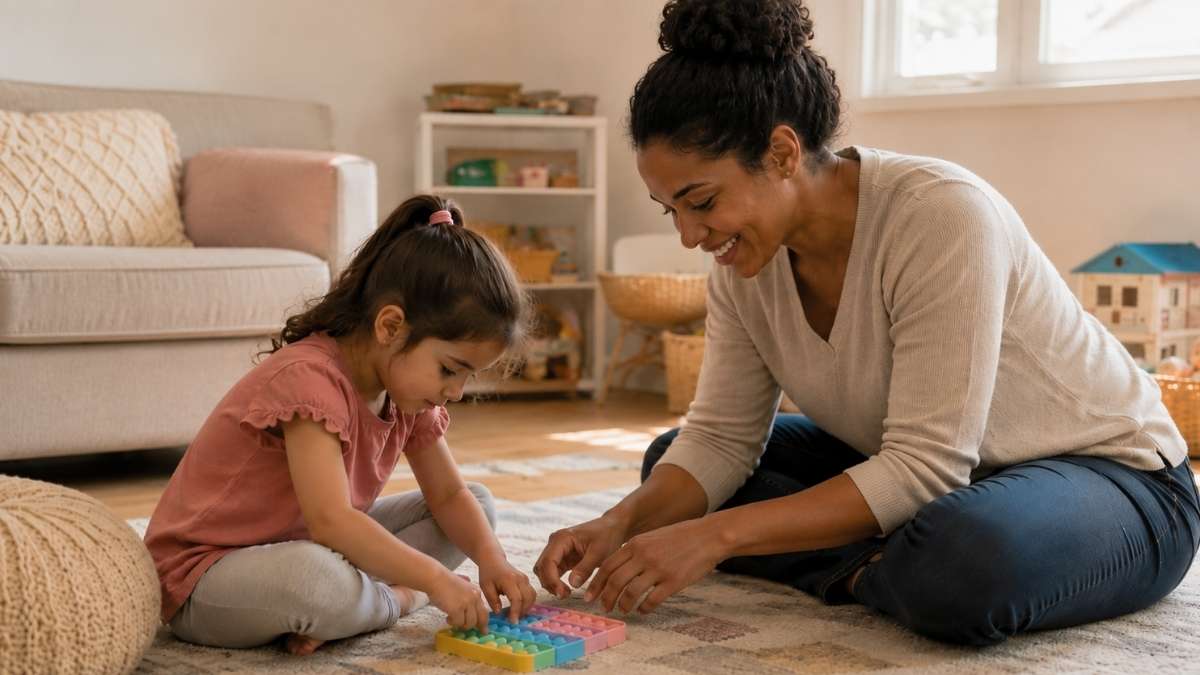
What happens during a DIR Floortime session in New Jersey includes observation, child-led play, and parent input. See what to expect before the visit.
Key Points:
A first DIR Floortime session in New Jersey starts with observation, parent input, and child-led play. Parents asking what happens during a DIR Floortime session in New Jersey should expect the therapist to study regulation, connection, communication, movement, sensory responses, and play first.
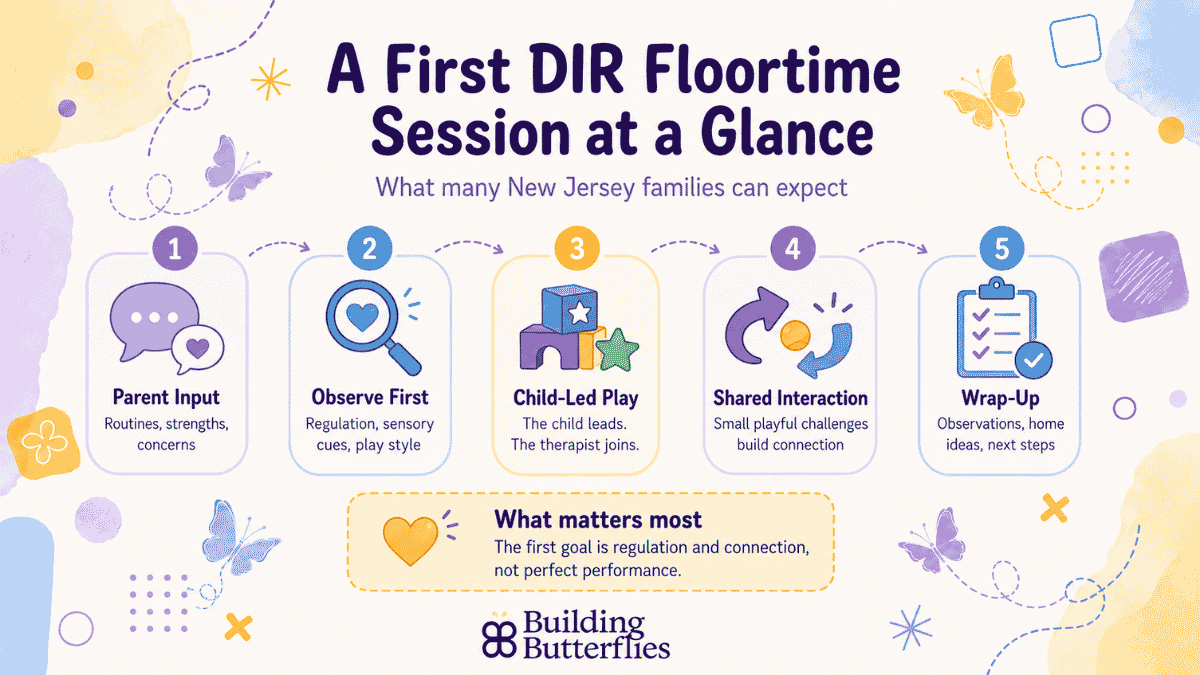
The first session starts before the toys come out. A therapist needs your view because reports rarely show daily life.
For New Jersey families, what to expect from DIR Floortime in NJ includes current supports. Children under 3 may receive New Jersey Early Intervention Services, which supports eligible infants and toddlers with developmental delays until age 3.
School-age children may have an Individualized Education Program (IEP) or a Child Study Team referral. New Jersey’s Department of Education says the Child Study Team manages evaluation from referral to IEP implementation when eligible.
The therapist may ask about:
The actual play begins the moment your child enters the room. This phase reveals the core of what happens during a DIR Floortime session in New Jersey as the therapist focuses completely on your child's natural choices.
Here is how that unfold looks:
This is exactly what it means to go inside a DIR Floortime session in New Jersey, where the adult adapts to the child. The therapist looks for small openings for connection, like a glance, smile, pause, sound, gesture, or repeated action. Then, the therapist builds short back-and-forth moments.

Parents sometimes worry that child-led therapy means a session lacks direction. However, how a DIR Floortime session works in New Jersey is highly intentional. Following the lead does not mean the therapist does nothing or lets the time slip away. The therapist joins what the child already finds meaningful, then adds a small challenge that invites a response. This process turns isolated actions into shared play.
Consider these common examples of how a clinician guides the interaction:
This active joining prevents the play from drifting. It keeps your child engaged while expanding social skills.
You are an active partner in this process, not a passive observer. During the first visit, you share what usually works at home and help the therapist read subtle cues. The practitioner may invite you to join the play, pause, wait, imitate, or respond differently. Often, the therapist models a strategy first, then coaches you through trying it. You should not expect a perfect performance from your child during this initial visit. The environment is new, and building comfort takes time.
When a child pulls away, that avoidance becomes useful clinical information. It shows the therapist where the child's comfort zone ends. The therapist may reduce demands, change the sensory setup, slow the pace, or start beside the child instead of face-to-face.
The first goal is connection and regulation, not quick compliance. This collaborative coaching structure supports long-term growth. One study found greater developmental gains when parents added home-based DIR/Floortime practice to their routines. This is why a DIR Floortime therapy session explained for NJ parents always highlights the caregiver's active role.
At Building Butterflies, we help parents understand what their child’s play, movement, and communication may be showing during the first DIR Floortime session. Our team offers DIR Floortime across New Jersey in home, school, clinic, and community settings. Contact us to talk through your child’s needs and ask what a first visit could look like for your family.

Once the play concludes, the clinical work continues through detailed documentation. A Floortime therapy session for New Jersey families is backed by careful tracking of specific developmental markers.
The therapist notes several key areas:
After tracking these markers, New Jersey families often discuss practical logistics. This wrap-up is the time to talk about scheduling, insurance questions, school coordination, or how Floortime fits beside speech therapy, occupational therapy, or existing IEP goals.
The first visit sets the stage for ongoing care. The therapist explains early observations in parent-friendly language so you understand the clinical reasoning behind what happens during a DIR Floortime session in New Jersey.
Next, you receive simple home practice ideas to try in Lakewood, New Jersey, or Monmouth County. The plan outlines session frequency, settings, goals, and parent coaching. Goals focus on regulation, engagement, communication, and shared problem-solving. Families can use these observations during conversations with their local Child Study Team.
New Jersey has high autism identification rates, with 36.4 per 1,000 4-year-old children identified with autism, according to a Centers for Disease Control and Prevention (CDC) report. Many families coordinate private therapy and school services at the same time, making a clear understanding of DIR Floortime: what happens in NJ highly valuable.

No. A first session usually starts with observation and child-led interaction. Some children sit, some move, and some need space first. The therapist follows how your child regulates and connects before adding playful challenges.
Yes. DIR Floortime can take place in natural settings when the provider offers those options. In New Jersey, the setting may depend on your child’s needs, schedule, service area, school access, and therapy goals.
Parents should bring evaluation reports, IEP documents if available, insurance information, and notes about daily routines and interactions, sensory needs, communication, and favorite activities. A familiar toy or comfort item can also help the therapist see how your child engages.
A first DIR Floortime session gives your child room to show how they connect, play, communicate, and recover when the world feels hard to manage. The clearest starting point is a session that respects your child’s pace while giving you practical next steps.
At Building Butterflies, we provide DIR Floortime therapy across New Jersey, including home, school, clinic, and community settings. Call (973) 899-1816 or send a message through our contact form today, and our team will help you discuss fit, location, and scheduling.

Your child holds incredible potential. At Building Butterflies, we use DIR Floortime Therapy to nurture development at the root, not just the surface, helping them connect, communicate, and flourish.
Contact us now to find out if your child can benefit from DIR Floortime Therapy.


©2026 Building Butterflies. All rights reserved.
Website Created By: Summit Group
