The Parent Role in DIR Floortime Therapy: How Daily Interactions Support Progress
The parent role in DIR Floortime therapy helps build connection, regulation, and communication. See how daily interactions support progress.

The parent role in DIR Floortime therapy helps build connection, regulation, and communication. See how daily interactions support progress.
Key Points:
While therapy sessions are important, many caregivers still wonder what happens once the therapist goes home. A lot of that pressure comes from thinking progress only counts during formal hours. For families exploring DIR Floortime in New Jersey, it helps to know that growth also happens through everyday moments at home and in the community.
The parent role in DIR Floortime therapy is not about turning you into a therapist. It is about helping you see that small, warm, back-and-forth moments throughout the day support regulation, connection, and communication. These moments happen during ordinary life, not apart from it.
Children spend much more time in daily life than in therapy sessions. That gives caregivers a special role. You see your child when they are calm, tired, playful, or overwhelmed. You might notice tiny changes before anyone else, like a new glance or a faster recovery after stress. That is why the parent role in DIR Floortime therapy carries so much value.
In DIR, everyday moments are part of development itself. Since about 1 in 31 8-year-old children in the United States has been identified with autism, practical home support is a real need for many households.
Once that role feels clearer, the next question is simple: what does it look like in real life without making home feel like a clinic?

Your job is not to run therapy all day or copy every move a clinician makes. In many cases, progress starts with simple things that look like normal interaction:
This type of support met evidence-based criteria in a 2020 review of 27 single-case design studies and 32 group design studies. For families looking for caregiver involvement in Floortime for autism in New Jersey, this is often a relief. Perfection is not the goal. More shared attention and co-regulation during ordinary life is the goal.
The way a parent responds might look different at breakfast than it does in the car, but the core idea stays the same: join in through child-led play and then gently expand the interaction.
This role often shows up in routines you already have:
Data from 12 papers show that home-based Floortime is linked with gains in communication, daily living skills, emotional functioning, and parent-child interaction.
This is why home-based Floortime therapy in NJ does not have to feel like a whole new job. The real value comes from how you respond in your normal day, rather than from creating a separate therapy world.
Some moments are open for play, while others are full of big emotions. Reading the difference helps a lot.
Signs your child may be open to interaction can include:
Signs your child may need regulation first can include:
Knowing when to slow down, keep things simple, or just stay close is a key part of parent-child connection in DIR therapy in NJ. Some days, being a calm presence is the best support you can offer. If you notice new concerns, a loss of skills, or safety issues, it is important to talk to the therapy team and your child’s pediatrician.
The American Academy of Pediatrics recommends autism screening at 18 and 24 months, along with regular checkups on development.

Support works best when it matches real life. This usually means starting small with one or two routines, like mealtimes or bedtime. A therapist can help you adjust your pacing around your child’s individual differences so the approach feels doable. Involving other family members also helps reduce strain on the primary caregiver.
At Building Butterflies, we help families use what already happens in the day as a starting point for growth, with support offered in the home, school, and clinic. This makes family-centered DIR therapy in NJ feel much more manageable.
Progress at home may look small before it looks big. That does not mean it is not real.
It may look like:
Some weeks feel smooth. Some do not. Progress is often uneven, especially when children are tired, sick, growing, or handling new demands. Still, those small repeated shifts are a big reason DIR Floortime at home can play such a meaningful part in development.
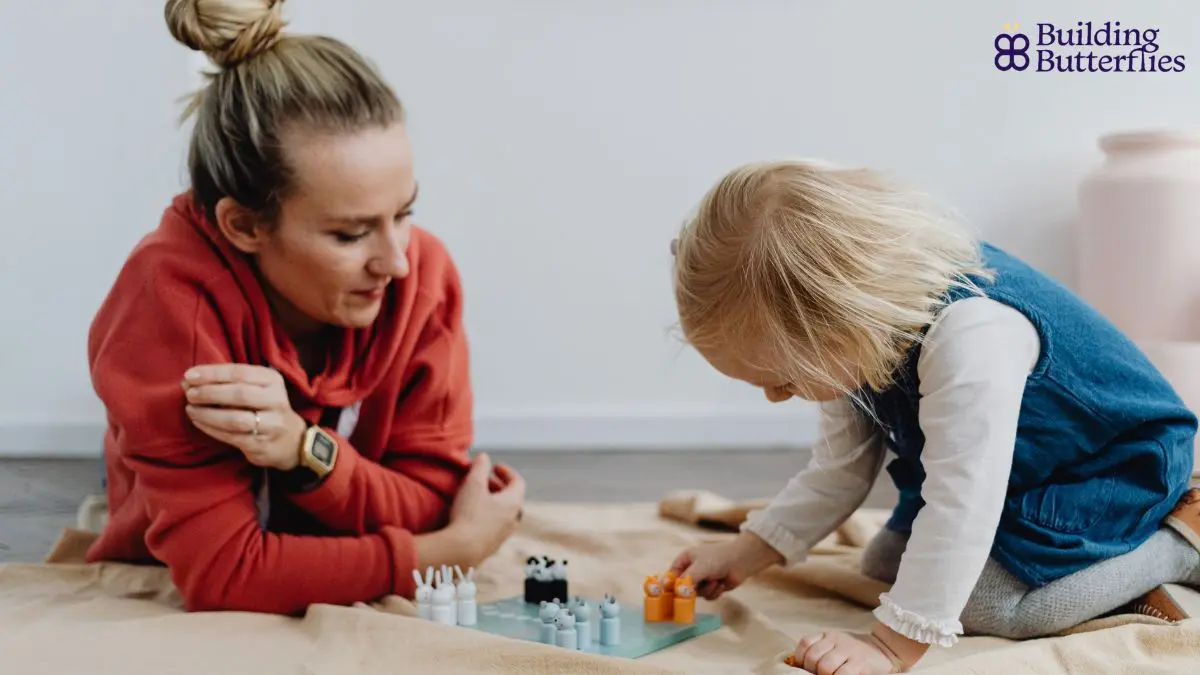
About 20 minutes at a time is a common format, often woven into daily routines. Many families work toward about 12 hours a week by combining short sessions with everyday moments like dressing or play.
No special toys are required. Floortime centers on shared attention and following the child’s interest. Household items, favorite objects, or movement games often support engagement better than buying something new.
Yes. Grandparents and other caregivers can use these ideas by staying responsive to the child's cues. Involving other family members can lower the strain on the primary caregiver and help the child see consistent support at home
Daily life does not have to become a separate therapy program for progress to grow. Responsive moments during meals and outings support connection over time.
At Building Butterflies, we help families in New Jersey understand how parent training for Floortime therapy can match real life. Our team can help you read your child’s cues and find simple ways to support your child's growth throughout the day.
Reach out to us if you would like help turning daily interactions into more connected moments.

Your child holds incredible potential. At Building Butterflies, we use DIR Floortime Therapy to nurture development at the root, not just the surface, helping them connect, communicate, and flourish.
Contact us now to find out if your child can benefit from DIR Floortime Therapy.


©2026 Building Butterflies. All rights reserved.
Website Created By: Summit Group
