DIR Floortime Provider Red Flags: A New Jersey Checklist
DIR Floortime provider red flags include vague credentials. A checklist helps NJ parents check training and care.

DIR Floortime provider red flags include vague credentials. A checklist helps NJ parents check training and care.
Key Points:
Choosing a DIR Floortime provider involves checking both the company and the person assigned to your child. A team should explain each practitioner’s role and qualifications before you agree to services.
Your first conversation also shows how the company handles questions. A request for a name, certificate, or explanation should lead to an answer you can check. You deserve time to review that information.
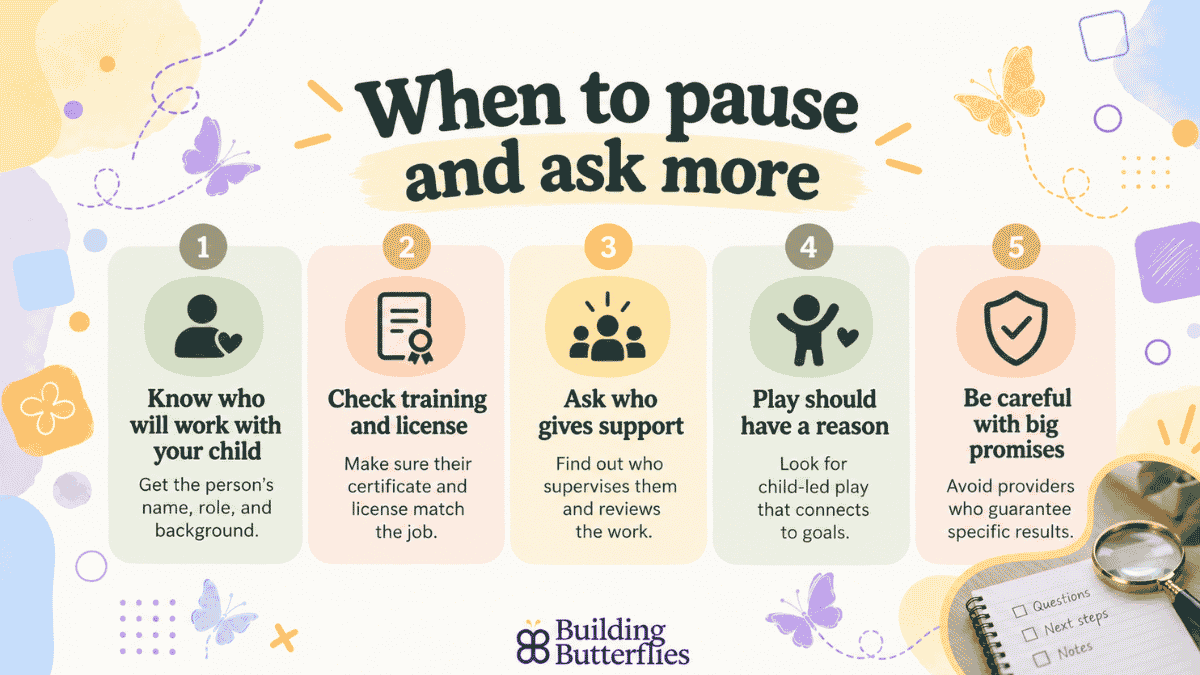
Credentials describe a person’s education, training, and professional qualifications. A label such as “developmental specialist” leaves questions unanswered unless the practitioner explains the background behind it.
The company should provide:
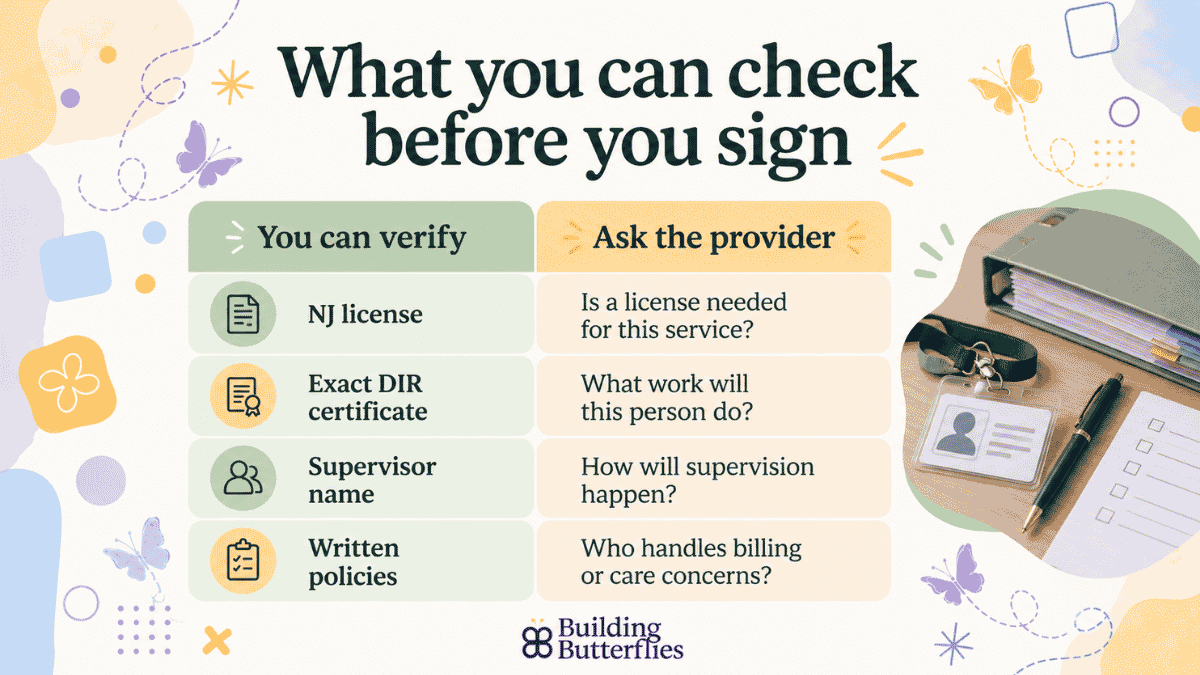
Training organizations use different certificate names, so the exact qualification is important. For ICDL-trained practitioners, DIR 101 is an introductory course. Completion alone does not qualify someone as a DIRFloortime provider. ICDL’s Basic and Proficient certificates also differ from its Advanced certificate, which includes caregiver coaching.
An ICDL DIRFloortime Assistant without a Basic certificate must work under the direct supervision of an Advanced or Expert DIR professional. A company using assistants should explain who supervises them and how that supervision works.
DIR certificates document training; they do not independently authorize professional practice. When a practitioner claims a New Jersey professional license, the state’s license verification system provides a way to check it. An assistant may have a different role from an independently licensed clinician, so each person’s responsibilities need explanation.
The following questions help turn general promises into details you can compare.
A plan can use a standard form and still reflect a child’s needs. The concern is whether its goals and recommendations come from information about your child.
At Building Butterflies, our DIR Floortime parent coaching includes feedback while caregivers play with their child. For classroom concerns, our school-based support includes observation and collaboration with educators. Questions about either service should cover who provides it and how family or teacher input reaches the team.
DIR Floortime combines following a child’s lead with developmental challenges. A practitioner should explain how an interaction connects to the child’s goals. A session can look playful while still having a purpose.
For example, a child rolling a ball may enjoy an adult joining the game. A playful pause could invite the child to request another turn through movement, a gesture, a sound, or words. The practitioner should explain what they noticed and why they responded that way.
Warning signs during play include:
A child moving away or becoming upset deserves attention. The team should explain how those signals affect its response. A first-session overview can help you picture the observation and interaction involved.
A broad statement such as “We personalize everything” gives you little to evaluate. A follow-up question can show how the practitioner thinks.
Questions to ask a DIR Floortime therapist include:
The answer should connect an observation to an action. For example, a practitioner might explain that a child turns away when play becomes loud, so the adult would reduce the noise and watch the response.
The provider does not need to predict your child’s behavior during an introductory call. An honest explanation of what the team still needs to learn is more credible than a complete treatment plan before observation.
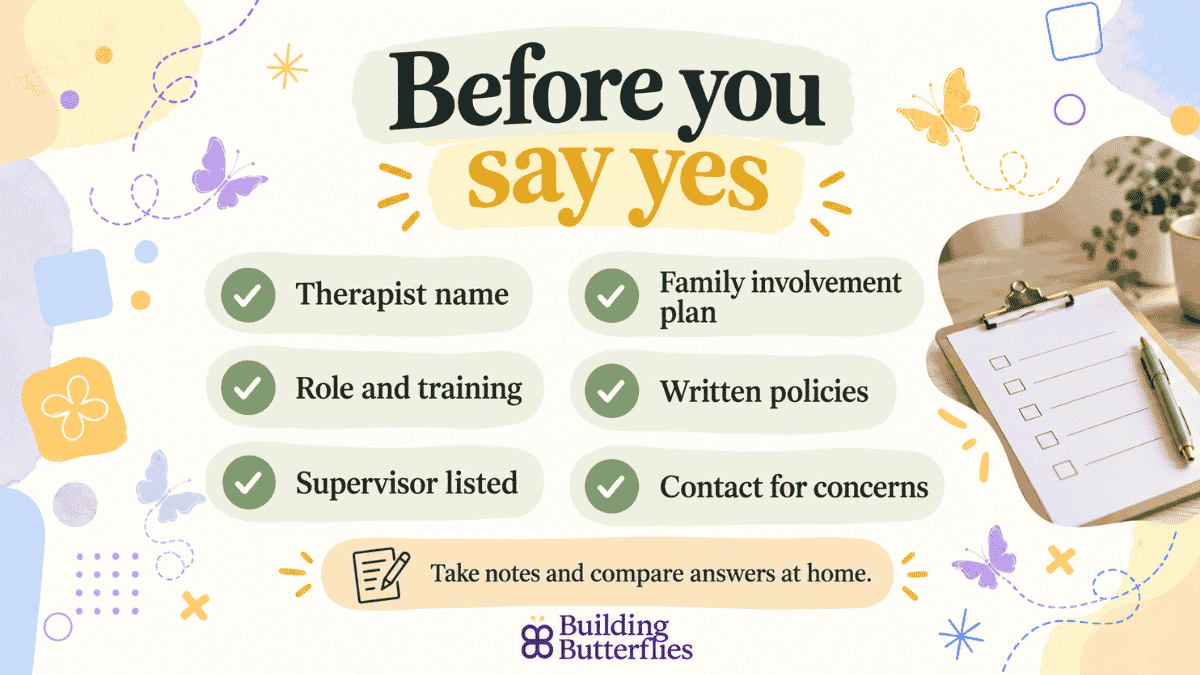
A helpful clinical conversation should lead to understandable service information. Before signing, your written information should cover:
Pressure to commit before receiving answers deserves a pause. A company’s response to an ordinary administrative question can help you judge whether you will feel comfortable raising concerns later.
After the provider checks, the steps from intake to the first session can help you prepare for enrollment.
Reviews can describe experiences with staff communication, scheduling, or the setting. A positive review cannot verify the assigned practitioner’s qualifications or predict your child’s results. Details about how a company handles concerns may help you form questions for your own conversation.
The provider should explain why it wants the recording, who will see it, how it will store it, and whether it will use it for training or another purpose. A written explanation should also cover consent and any alternatives to recording.
A shared list can separate concerns about qualifications, the child’s comfort, communication, and practical arrangements. Each caregiver can note what the provider actually said. Unanswered questions can then go back to the company before the family decides.
A provider conversation should leave you able to describe who will deliver care, how the team makes decisions, and where concerns will go. Unanswered questions deserve follow-up before a commitment.
At Building Butterflies, we provide DIR Floortime therapy in New Jersey through home, school, and clinic services. Our team welcomes questions about our settings, caregiver coaching, and the support you are considering. Your contact message can include your town and the questions you want to address.

Your child holds incredible potential. At Building Butterflies, we use DIR Floortime Therapy to nurture development at the root, not just the surface, helping them connect, communicate, and flourish.
Contact us now to find out if your child can benefit from DIR Floortime Therapy.


©2026 Building Butterflies. All rights reserved.
Website Created By: Summit Group
