Does NJ FamilyCare Cover DIR Floortime Therapy?
NJ FamilyCare may cover DIR Floortime for eligible children. Provider and approval rules affect access to care.

NJ FamilyCare may cover DIR Floortime for eligible children. Provider and approval rules affect access to care.
Key Points:
NJ FamilyCare covers DIR autism services for eligible children in New Jersey. Coverage depends on the child’s needs, provider qualifications, and health-plan requirements. An active insurance card does not approve treatment by itself.
A parent may hear “Medicaid covers Floortime” and still need help finding a participating provider. The checks below explain what to confirm before an assessment, regular sessions, or any payment agreement.
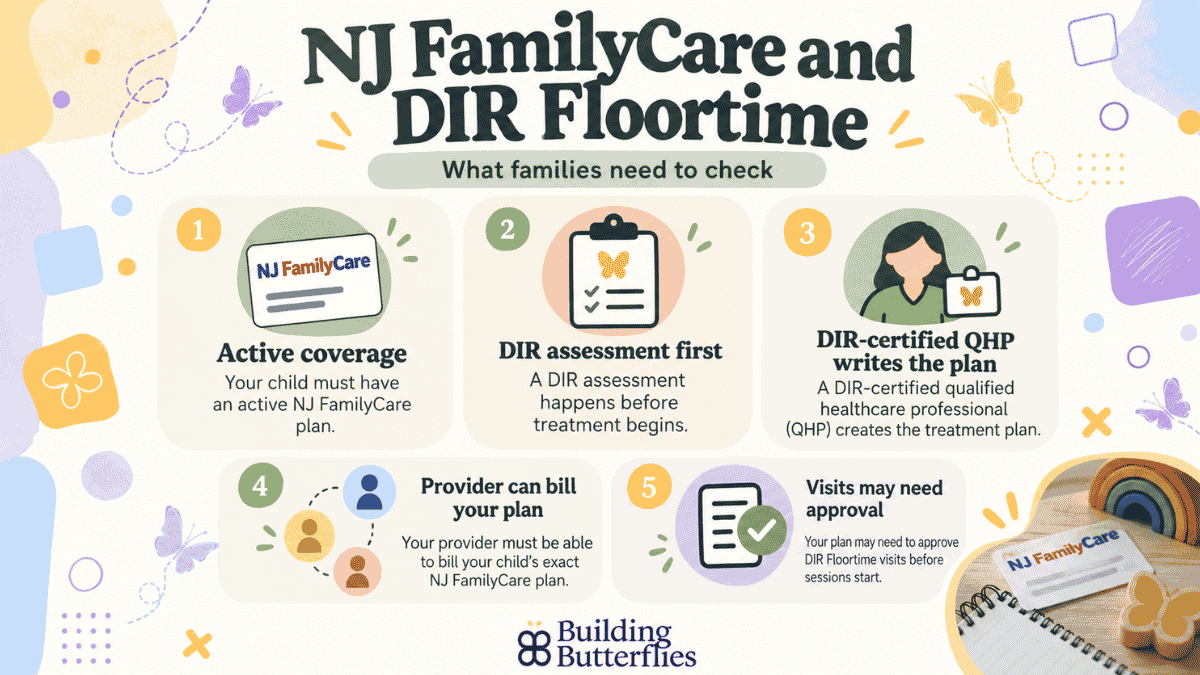
The New Jersey Medicaid DIR service rules describe three parts of care:
Caregiver coaching does not automatically qualify as a separate covered service. The provider and plan must check how coaching relates to the child’s covered treatment.
The state’s managed-care contract identifies the DIR benefit for members with an autism diagnosis who qualify for Early and Periodic Screening, Diagnostic, and Treatment (EPSDT), Medicaid’s child health benefit. The contract lists an age range beginning at 18 months; EPSDT eligibility ends at age 21.
Coverage involves two decisions:
The NJ FamilyCare enrollment information explains how to apply for health coverage. The child’s health plan handles questions about access to the DIR benefit.
New Jersey requires a physician or another licensed health practitioner to recommend autism treatment within that professional’s permitted role. The DIR assessment must come from a licensed, DIR-certified qualified health professional, often called a QHP.
Only a QHP may create or revise the treatment plan. Other qualified DIR providers may deliver interventions under the state’s credential and supervision rules. A provider’s training to lead sessions does not necessarily qualify that person to perform the assessment.
For parents, the practical question is, "Who will assess my child, who will write the plan, and who will provide the sessions?”
Most NJ FamilyCare members receive benefits through a managed care organization, or MCO. Providers generally need to participate in the child’s MCO network. Medicaid enrollment and network participation are separate requirements.
For example, a fictional provider might say, “We accept Horizon,” while referring to commercial insurance. A child with Horizon NJ Health needs an answer about that specific NJ FamilyCare plan.
Prior authorization means the plan reviews a service before treatment. For example, Aetna Better Health’s DIR requirements call for an assessment, proposed treatment plan, and authorization request. Families should confirm their own plan’s process, including whether the assessment needs separate approval.

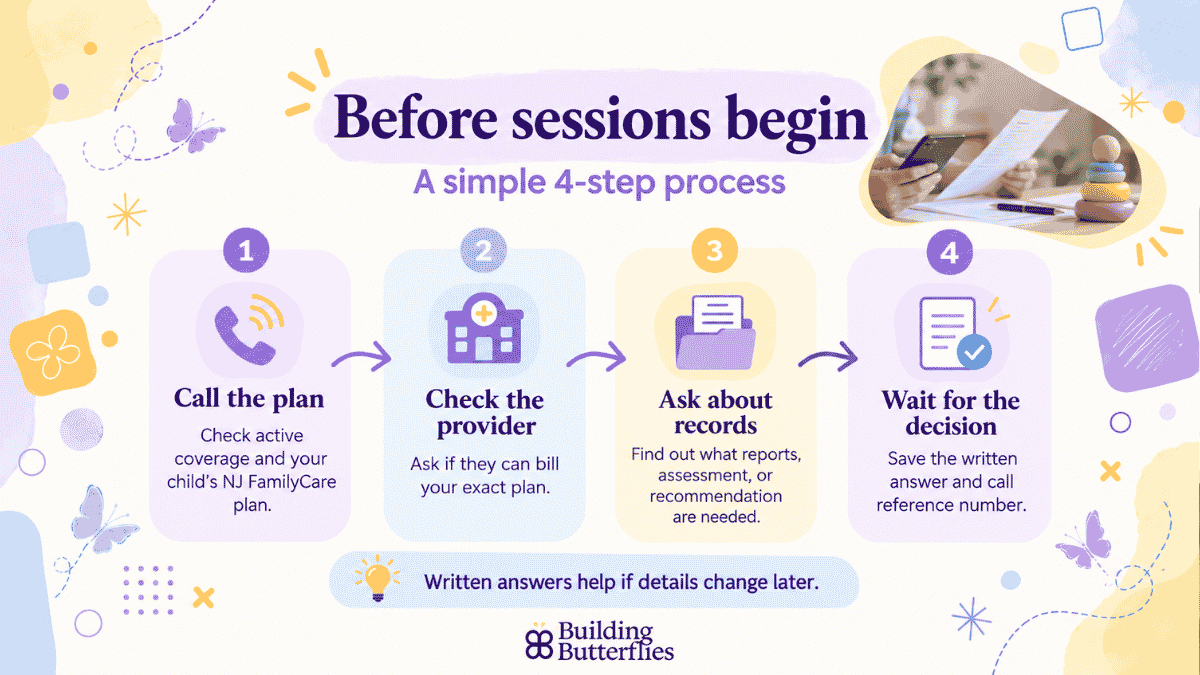
The NJ FamilyCare health-plan directory lists member-services contacts. A coverage call can begin with the child’s insurance card and any available autism reports.
The following questions help parents organize the conversation:
A written decision and call reference number give families something to refer to if answers differ later.
At Building Butterflies, our in-home DIR Floortime sessions include child-led interaction and caregiver participation. We work within familiar surroundings, where parents can practice responding during play and daily routines.
Coverage questions concern payment. Our explanation of what happens during a first DIR Floortime session addresses the visit itself, including observation and parent input.
A denial needs a specific response based on its reason. Missing records, provider participation, and a medical-necessity decision can require different next steps.
For example, Fidelis Care describes written notices and review options in its NJ FamilyCare appeals process. Families should follow the instructions from their own plan.
A denied claim does not automatically make the family responsible for payment.
Under New Jersey’s beneficiary billing restrictions, participating Medicaid and NJ FamilyCare providers generally cannot bill members except in specified situations. One exception concerns noncovered or unauthorized services that a member knowingly chooses to receive.
Before accepting a charge, a parent can request a written explanation of the service, amount, and rule permitting payment. The child’s health plan can explain how its billing protections apply.
Commercial coverage follows different rules. Our DIR Floortime insurance article addresses questions about private plans.
Home is an allowed setting under the state’s DIR benefit rules, alongside provider offices and community settings. Coverage still depends on the proposed service, provider, and required approvals.
We also offer clinic-based DIR Floortime, with child-led play and caregiver involvement. Our service options do not establish coverage under a particular NJ FamilyCare plan.
A plan change calls for another provider-network check. Before the next visit, families should contact the new plan about the provider’s participation and how it will handle existing treatment approvals.
The DIR benefit excludes services a school must provide under a child’s Individualized Education Program, or IEP. Separate medical DIR services may still qualify. The school team handles IEP responsibilities, while the health plan handles the medical coverage request.
A coverage check should identify the qualified provider, required records, and approvals before treatment begins. Written answers also help parents understand any proposed charges.
Our team at Building Butterflies offers DIR Floortime in New Jersey through home and clinic sessions, with caregiver participation. Our contact form includes insurance and ZIP code fields, plus space for questions about the services your family is seeking.

Your child holds incredible potential. At Building Butterflies, we use DIR Floortime Therapy to nurture development at the root, not just the surface, helping them connect, communicate, and flourish.
Contact us now to find out if your child can benefit from DIR Floortime Therapy.


©2026 Building Butterflies. All rights reserved.
Website Created By: Summit Group
