How to Use DIR Floortime at Home Every Day in 10-Minute Routines
How to use DIR Floortime at home every day starts with 10-minute routines, child-led play, and small pauses. See simple steps for home practice.
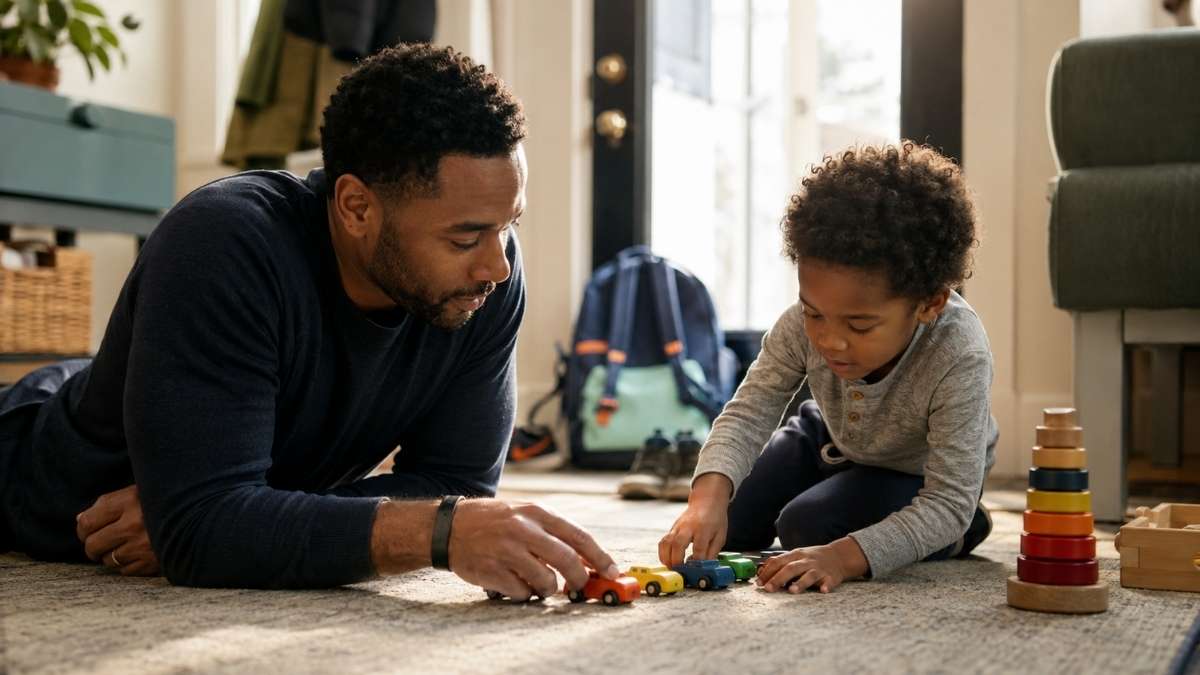
How to use DIR Floortime at home every day starts with 10-minute routines, child-led play, and small pauses. See simple steps for home practice.
Key Points:
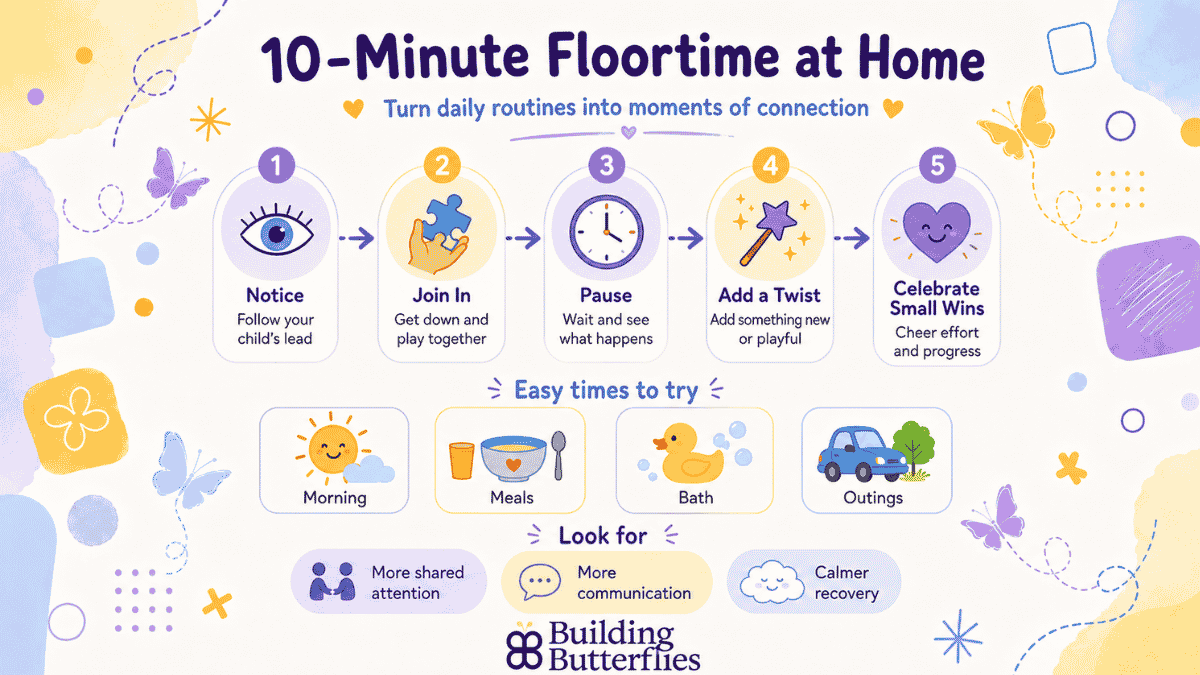
Parents who want to learn how to use DIR Floortime at home every day can start with 10 minutes inside routines they already do. Watch your child, join their interest, wait for a response, then add one small playful challenge.
The International Council on Development and Learning (ICDL) says Floortime can happen during family life, including bath, car, chores, stores, and play. Short routines do not replace therapy. They help families practice the connection between sessions.
DIR stands for Developmental, Individual-differences, and Relationship-based support. Floortime applies this model through playful, child-led interaction. Parents often look for home-based Floortime support in NJ because this state has a high rate of autism identification.
Centers for Disease Control and Prevention (CDC) data show that 1 in 29 children in New Jersey receives an autism diagnosis. Ten minutes is enough to make a real difference.
Successful Floortime strategies for home daily practice rely on four clear steps:
Keep these cautions in mind:
Mornings in New Jersey households can feel very rushed. School drop-offs and area commutes leave little free time. Because of this rush, pick just one morning task instead of changing the whole morning.
Try these DIR Floortime home activities for parents:

Meals and bath time provide excellent spaces for interactive connection because your child is already in one place.
You can build communication and interaction skills during lunch or dinner without relying on spoken language:
Water play helps many children organize their sensory systems. When using Floortime techniques at home for autism support, focus on comfort:
Sometimes, parents need support to spot these small windows of connection. At Building Butterflies, we provide DIR Floortime at home parent coaching to help you identify these moments during your normal day. Our team collaborates with families across northern and central New Jersey to make daily care feel collaborative.

You can easily practice these techniques outside the house. New Jersey families spend significant time traveling between locations. Whether you are running errands in Newark, New Jersey, grocery shopping in Lakewood, or visiting a park in Toms River, you can find a connection.
Always maintain clear physical safety rules. Child-led play does not mean unsafe play.
Many parents share common worries on family forums about what to do if a child does not respond to play invitations. A study on parent perspectives highlights that parents want to join their child’s world without forcing performance.
If you experience these challenges, use these direct strategies:
Progress often begins with a single brief glance or a sudden pause.
Consistent daily practice leads to gradual growth. DIR Floortime parent training can help improve a child's attention and ability to initiate interactions.
A systematic review summary by the American Speech-Language-Hearing Association (ASHA) notes that parent-involved DIR Floortime programs show measurable increases in social-emotional development. As you use a daily DIR Floortime practice parents' guide, watch for these changes:
Yes. This model focuses on gestures, glances, sounds, and physical movements. Nonverbal communication forms the foundation for speech, allowing you to build meaningful communication circles without requiring words first.
Yes. Immediately pause your playful challenge, lower your demands, and focus on helping your child feel calm. A child who feels overwhelmed cannot learn, making social and emotional regulation your top priority during any distress.
Start with just one or two routines each day. Add more sessions only once the practice feels natural. Quality, emotional warmth, and accurate timing matter far more than forcing numerous sessions into a busy day.
Ten-minute routines help parents practice Floortime without turning home into a clinic. Morning care, meals, bath, errands, and play can all become chances for connection.
At Building Butterflies, we support New Jersey families through DIR Floortime Therapy, Parent Training & Coaching, and In-Home DIR Floortime Therapy. Call or send the contact form to request a consultation. After that, our team reviews intake details and service area availability with you.

Your child holds incredible potential. At Building Butterflies, we use DIR Floortime Therapy to nurture development at the root, not just the surface, helping them connect, communicate, and flourish.
Contact us now to find out if your child can benefit from DIR Floortime Therapy.


©2026 Building Butterflies. All rights reserved.
Website Created By: Summit Group
