Meltdowns Aren’t Misbehavior: DIR Floortime and Your Child’s Sensory Processing
DIR Floortime sensory processing explains how overload builds before a meltdown. Your next step is to spot early cues and adjust the environment.

DIR Floortime sensory processing explains how overload builds before a meltdown. Your next step is to spot early cues and adjust the environment.
Key Points:
When a child experiences a sudden meltdown, it is rarely a conscious choice to be difficult. DIR Floortime sensory processing starts with a simple reframe: an intense emotional reaction may be your child's nervous system signaling that sound, movement, touch, light, or another environmental demand has exceeded what they can process.
At Building Butterflies, our DIR Floortime approach looks at what happened before the reaction, how your child tried to cope, and which adult responses helped connection return. Families often tell us that the moment seemed sudden. A closer review usually reveals earlier changes in movement, voice, attention, or tolerance for touch.
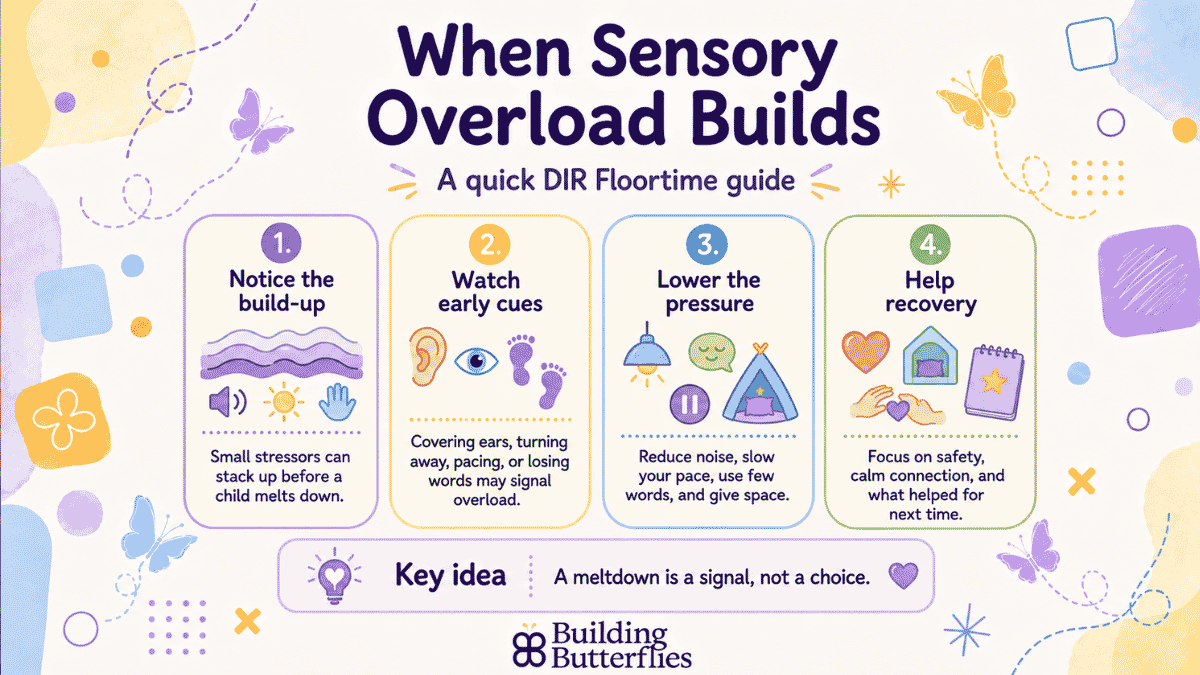
The visible emotional reaction is usually the final step in a cumulative process. Multiple manageable inputs can stack up throughout the day until a child's processing capacity reaches its limit. While sensory processing plays a large role, other factors like communication frustration, physical fatigue, hunger, pain, or unexpected routine changes can also contribute.
Without looking at the preceding moments, an abrupt reaction can easily look like intentional refusal. A child might manage quiet play at home, but a series of small sensory inputs during a busy day can trigger a sudden reaction.
By identifying early signs of sensory overload in children with autism, adults can intervene before a full reaction occurs. Common triggers include:
The Developmental, Individual Differences, Relationship-Based model views every interaction through three connected lenses.
During our sessions, we carefully observe the full interaction rather than focusing only on the final behavior. Before suggesting specific adjustments, a practitioner looks for several key details:

Every child's nervous system receives and interprets environmental signals in a distinct way. A child who is over-responsive to sound may find standard background noise painful, while a child who is under-responsive might not notice someone calling their name. Sensory seekers actively look for intense input to feel organized in their bodies.
For instance, one child might cover their ears when music begins playing, while another child turns up the volume, jumps around, or vocalizes loudly to organize their sensory system.
A child can also seek one type of sensory input while actively avoiding another. Someone who loves fast spinning movement might still experience significant distress from fluorescent light fixtures or unexpected light touch.
To support emotional regulation through DIR, we adjust our interactions in real time to match what the child's nervous system needs. These real-time adjustments often include:
Instead of using generic checklists, DIR Floortime sensory strategies focus on modifying adult responses and surroundings based on careful observation.
Recognizing subtle warning signals allows adults to reduce environmental pressure early. Common early indicators include:
When these signals appear, helpful responses include reducing background noise, slowing down transitions, using simple language, and offering predictable movement.
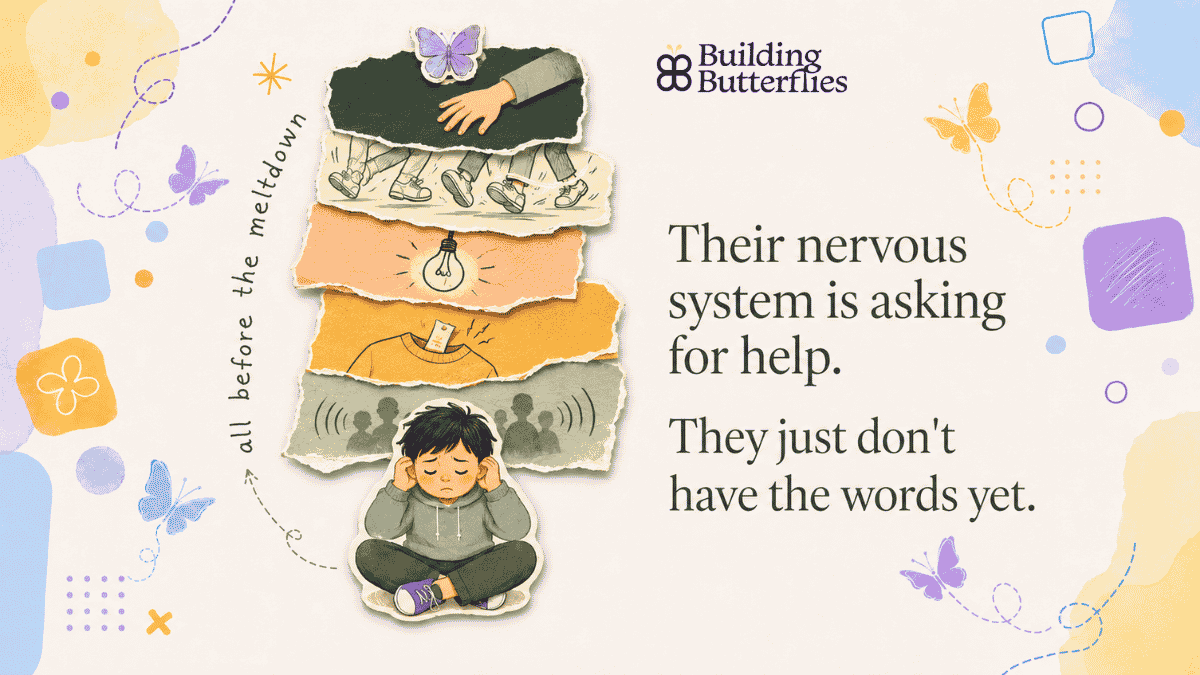
When a full overload reaction occurs, the primary priority is safety and input reduction. Adults can support the child by:
Recovery requires time and quiet connection. Children may experience physical exhaustion, seek deep pressure, or want to return to familiar, low-demand play.
Research tracking 1,517 children showed that early sensory processing patterns directly influence later participation in daily activities. After recovery, adults can note what triggers were present, what early cues appeared, and what helped restore calm to prepare for future routines.
When recurring sensory overload patterns are difficult to interpret, observing your child during play can reveal valuable answers. Contact Building Butterflies to explore how our in-home, school-based, or clinic-based DIR Floortime sessions can support your child's sensory development across New Jersey.
Modifying physical surroundings like lighting or noise is only the initial step in regulation. True co-regulation happens through the relationship between the adult and the child.
One family we worked with in Monmouth County noticed their daughter felt far more relaxed during in-home sessions because support happened directly within her familiar environment. Therapy felt like natural play to her rather than a structured task.
As we followed her lead and adjusted our sensory input to match her pace, she began initiating shared interactions that had previously felt difficult in busier settings.
Not every intense reaction stems from sensory processing differences. Sudden changes in behavior can also relate to physical pain, underlying illness, poor sleep, hunger, medication changes, or anxiety. Parents should contact a pediatrician if emotional reactions start suddenly, appear unusually severe, involve safety concerns, or accompany noticeable changes in eating, sleeping, or overall health.
DIR Floortime can easily integrate alongside speech therapy, medical care, occupational therapy, and educational programs. For families helping a child with autism with sensory issues in NJ, establishing consistent communication across home, school, and therapy teams helps everyone use matching cues, environmental supports, and calming strategies.

No separate diagnosis is required. We can begin addressing sensory processing disorder and DIR Floortime principles by observing your child's unique responses to sound, touch, and movement. A therapist looks at these patterns during natural interaction. Medical or occupational therapy evaluations remain helpful if sensory challenges affect health, safety, or self-care.
Yes. Occupational therapy focuses on specific sensory integration therapy for autism, motor planning, and daily living skills. DIR Floortime connects those physical goals to emotional regulation, shared attention, and communication.
Yes. Caregivers can share observed sensory triggers, early warning cues, and effective calming strategies with school personnel. School-based DIR practitioners can also observe classroom environments directly, assisting staff with helpful adjustments to interaction pacing, transition routines, verbal instructions, and sensory input.
Sensory reactions become far easier to understand when we look at the whole picture, from early body signals to the environmental conditions present before a meltdown. Partnering with a skilled practitioner helps turn these observations into practical co-regulation strategies built around your child's strengths.
At Building Butterflies, our team provides in-home, school-based, and clinic-based DIR Floortime services across Bergen, Essex, Morris, Ocean, Monmouth, Middlesex, and Hudson Counties. Call (973) 899-1816, email info@buildingbutterflies.com, or fill out our online contact form to connect with our intake team. We will discuss your child's unique sensory patterns, answer your questions, and determine the best setting for your family.

Your child holds incredible potential. At Building Butterflies, we use DIR Floortime Therapy to nurture development at the root, not just the surface, helping them connect, communicate, and flourish.
Contact us now to find out if your child can benefit from DIR Floortime Therapy.


©2026 Building Butterflies. All rights reserved.
Website Created By: Summit Group
